
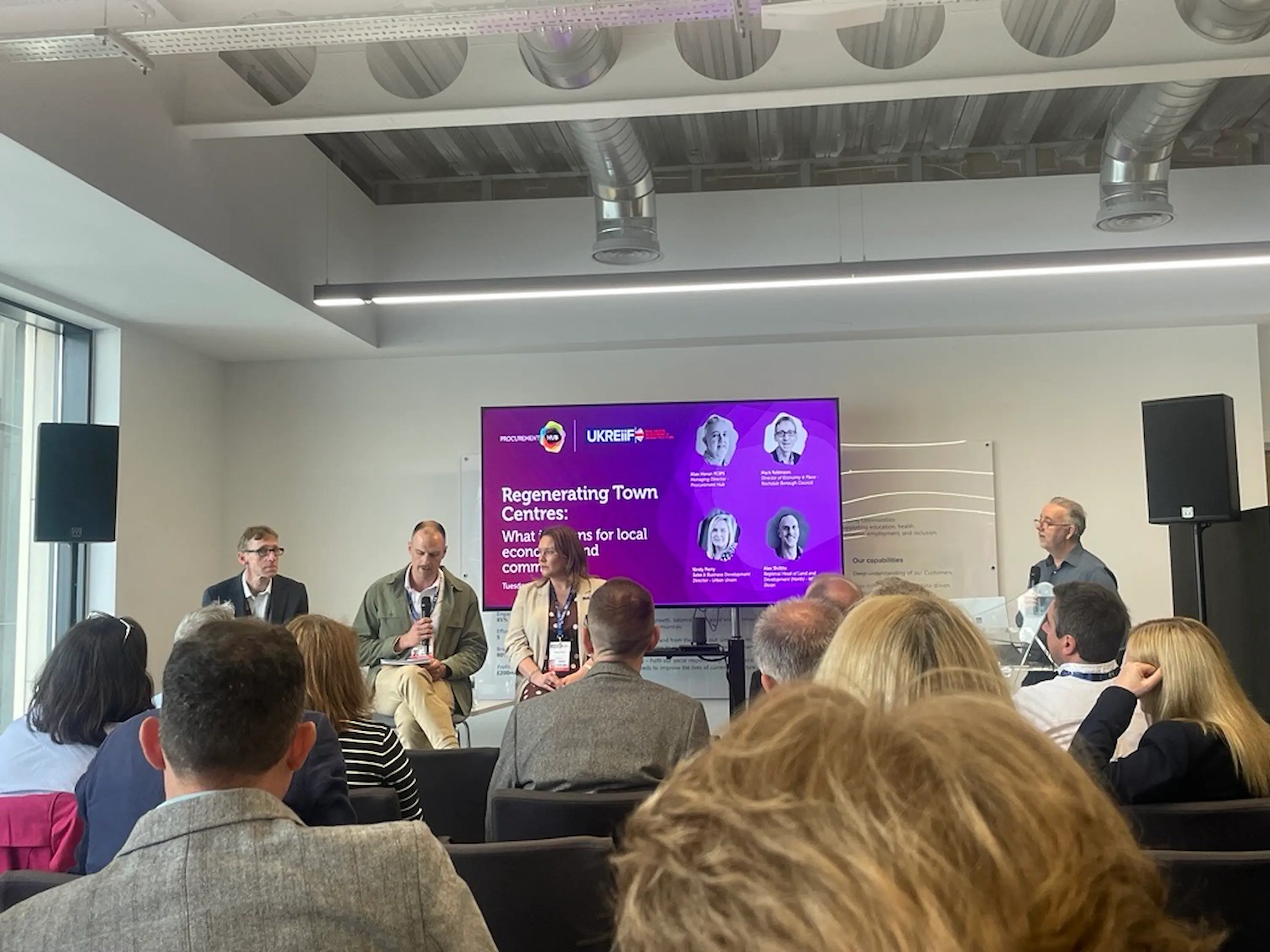
At this year’s UKREiiF, our panel session explored one of the biggest questions facing the regeneration sector today: how do we create places that deliver long-term economic growth while genuinely improving lives for local communities?
The discussion brought together perspectives from local government, developers and regeneration specialists from Willmott Dixon, Rochdale Borough Council and Urban Union.
Regeneration works best when communities shape it
Successful regeneration is not something that should happen to communities. It should happen with them.
The panel discussed how the strongest regeneration programmes begin by listening to local people from day one understanding what residents need, what challenges they face and what they want their area to become over the next 10, 20 or even 30 years.
Rather than relying on a one-size-fits-all approach, regeneration must reflect the identity, culture and priorities of each place.
That means moving beyond tick-box consultation and creating genuine, ongoing engagement with communities throughout the entire programme lifecycle.
Why community engagement matters in regeneration
One of the key takeaways from the session was that effective communication looks different for every community.
Younger audiences may engage through social media and digital platforms, while older residents often prefer face-to-face conversations and printed updates.
The panel shared several practical engagement approaches, including:
Community workshops
Printed quarterly newsletters
Social media campaigns
Open-door events
Local place ambassadors
School and youth engagement initiatives
Speakers also highlighted the importance of involving local businesses, community groups and volunteers to help build trust and create long-term pride in place.
Regeneration should deliver more than buildings
A major focus of the discussion was social value and how regeneration programmes can create lasting benefits beyond construction.
Throughout the discussion, there was a strong emphasis on ensuring social value is not simply treated as a KPI at the end of a project. Instead, it should be embedded from the earliest stages of planning and delivery to create long-term benefits for communities.
Examples discussed included:
Local apprenticeships and job creation
Skills and training opportunities
Support for local supply chains
Partnerships with schools and colleges
Community wellbeing initiatives
One example from Rochdale Borough Council demonstrated measurable outcomes including:
49% local spend within 20 miles
63% local labour within 20 miles
Hundreds of students engaged through workshops and apprenticeship activity
The wider point was clear, successful regeneration improves opportunities for local people while creating stronger, more resilient communities.
The importance of long-term planning
Regeneration is rarely a quick process. Many town centre and housing regeneration programmes span 15 to 30 years, which means flexibility and long-term thinking are essential.
The discussion also explored how regeneration projects must adapt over time to changing markets, economic conditions, community needs, technology and housing demand. This means building flexibility into masterplans, tenure mixes and delivery models from the outset to ensure schemes remain relevant and sustainable over the long term.
The session also reinforced the importance of continuing community involvement long after construction ends through legacy planning and ongoing stewardship.
Strong partnerships are critical
Another major theme throughout the session was partnership working and the role collaboration plays in delivering successful regeneration programmes. Long-term regeneration relies on local authorities, developers, housing associations, investors, communities and wider public sector organisations working together towards a shared vision.
The discussion explored how trust, patience and flexibility between partners are often what determine the long-term success of regeneration schemes, particularly those delivered over 15 to 30 years.
Blended funding models combining public, private and institutional investment were highlighted as increasingly important for unlocking complex regeneration opportunities.
This links closely to the role that our Major Projects Framework can play in supporting long-term regeneration. By providing a compliant and efficient route to market, the framework helps public sector organisations access experienced partners such as Willmott Dixon, Robertson Group and Farrans who are experienced at delivering complex regeneration programmes while embedding social value, collaboration and long-term community outcomes throughout the project lifecycle.
Key Lessons from the session
The session closed with several important messages for the regeneration sector:
1. Put communities at the centre
Regeneration should always begin with listening and engagement.
2. Embed social value early
Social outcomes should run throughout development, construction and long-term stewardship.
3. Plan for the long term
Successful regeneration requires patience, flexibility and continuity.
4. Build strong partnerships
Collaboration between public and private partners is essential.
5. Create places people feel proud of
Regeneration is ultimately about improving quality of life and creating sustainable communities.
Overview
Regeneration is ultimately about improving quality of life and creating sustainable communities.
The panel reinforced that successful regeneration is about much more than physical development.
It is about creating places where people want to live, work and spend time. Places shaped by communities, supported by partnerships and designed for long-term success.
For everyone who attended our session at UKREiiF, thank you for being part of the conversation. If you missed it, we hope these insights provide a useful overview of the key discussions shaping the future of regeneration across the UK.